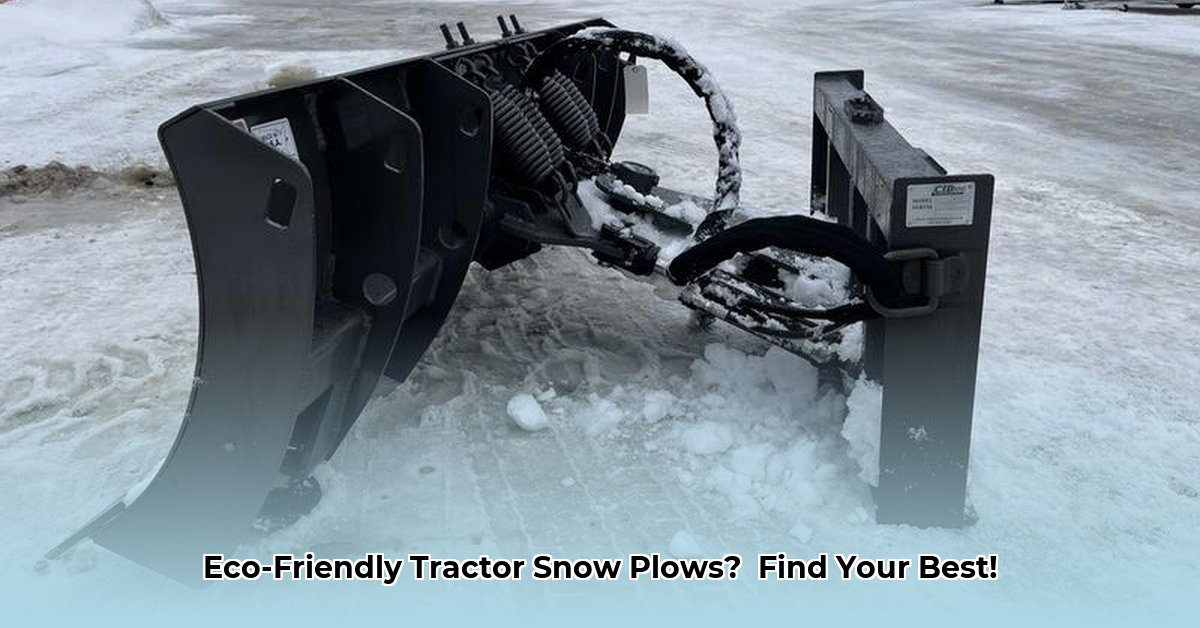
Hydraulic Snow Plow for Tractor: Finding the Perfect Match for Your Farm
Winter's impact on farming operations is undeniable. Efficient snow removal is crucial for maintaining accessibility and minimizing yield losses. A hydraulic snow plow, mounted on your tractor, provides a powerful solution. However, selecting the optimal plow requires careful consideration of various factors. This guide will help you navigate your options, selecting a plow that meets your needs and promotes sustainable farming. For more plow options, check out this helpful resource.
Understanding Your Hydraulic Snow Plow Options
The market offers a diverse range of hydraulic snow plows, catering to various tractor sizes and snowfall conditions. Two prominent examples, Homestead Pinnacle Series and Artillian Hydraulic Angling Plow, illustrate the key distinctions.
The Homestead Pinnacle Series boasts robust construction, designed for tractors equipped with a Universal Quick-Attach (SSQA) front loader system (a system that allows for quick attachment and detachment of implements). This simplifies installation, but limits compatibility to tractors with this specific system. Its weight (480-520 lbs) necessitates a powerful tractor.
Conversely, the Artillian Hydraulic Angling Plow offers greater versatility. With a weight ranging from 209-223 lbs, it's compatible with a broader range of tractors. However, its proprietary mounting frame requires additional setup.
The following table summarizes key specifications:
| Feature | Homestead Pinnacle Series | Artillian Hydraulic Angling Plow |
|---|---|---|
| Weight (lbs) | 480-520 | 209-223 |
| Mounting System | Universal Quick-Attach (SSQA) | Proprietary Fork Frame |
| Tractor Compatibility | Limited (requires SSQA) | Wider Range |
| Approximate Price Range | Varies considerably depending on dealer and options | Varies considerably depending on dealer and options |
Choosing the Right Plow: A Personalized Approach
Selecting the ideal snow plow involves careful consideration of several key factors. Don't rush the process. A poorly matched plow can result in reduced efficiency and even damage to your equipment.
Tractor Compatibility: Ensure your tractor's horsepower, hydraulic capacity, and hitch type are compatible with the chosen plow's specifications. Underestimating this aspect can lead to significant problems.
Snowfall Patterns: Heavy, frequent snowfall demands a more robust plow, capable of handling increased weight and workload. Areas with lighter snowfall might justify a smaller, less expensive option.
Budgetary Constraints: Consider the initial cost, maintenance expenses (including repairs and fluid replacements), and fuel consumption for the entire lifespan of the plow.
Property Dimensions: Larger farms often benefit from wider plows, optimizing snow clearance efficiency and reducing labor.
Sustainability: Eco-Conscious Snow Removal
Sustainable farming extends beyond crop production to encompass equipment selection. When choosing a snow plow, prioritize environmentally responsible considerations:
Material Sourcing: Inquire about the manufacturer's commitment to using recycled materials and sustainable manufacturing processes. This data is often available on company websites or in other publications.
Energy Efficiency: A more efficient hydraulic system minimizes fuel consumption, reducing your carbon footprint. Look for systems that boast superior efficiency ratings.
Longevity and Durability: A durable plow reduces waste by extending its operational lifespan, minimizing the need for frequent replacements. This translates to a lower environmental impact.
Installing and Maintaining Your Snow Plow: A Practical Guide
Proper installation and routine maintenance are crucial for ensuring your snow plow's optimal performance and longevity. Always prioritize safety!
Step 1: Consult the Manual: Thoroughly review the manufacturer's instructions before initiating any assembly or operational procedures.
Step 2: Prioritize Safety: Ensure your tractor is stable and securely positioned before attaching the plow. Observe all safety guidelines.
Step 3: Routine Maintenance: Regularly check hydraulic fluid levels, inspect connections for leaks, and lubricate moving parts as needed.
Step 4: Proper Storage: Clean and store the plow properly during off-season to prevent corrosion and damage.
Cost Analysis: Return on Investment (ROI)
The total cost of ownership extends beyond the initial purchase price. Factor in maintenance, repairs, fuel consumption, and potential labor savings compared to manual snow removal. The resulting calculation will provide a clearer picture of your return on investment (ROI). A well-chosen plow can significantly enhance operational efficiency, contributing positively to your bottom line.
Making the Right Choice for Your Farm
Choosing the ideal hydraulic snow plow involves a multifaceted assessment. Careful consideration of your needs, budget, and environmental impact is crucial for making an informed decision. Prioritize thorough research and a wise selection to maximize your farm's efficiency and sustainability. Remember, this is an investment that will directly impact your farm's success.